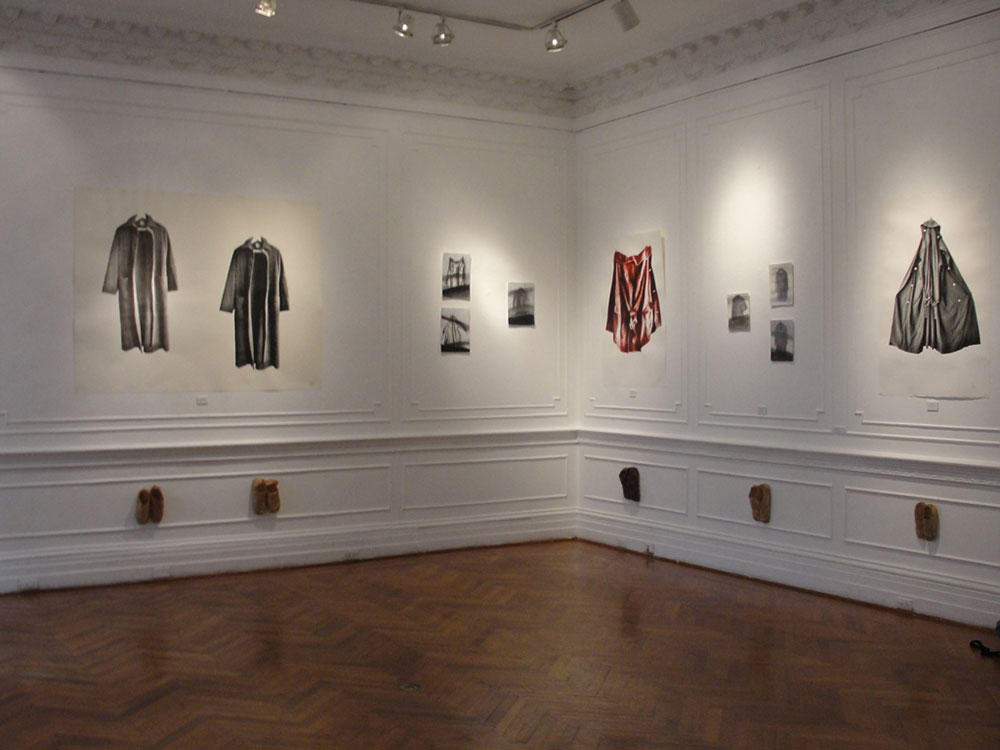
Holocaust Museum Buenos Aires //
ABANDOMENT/RESTITUTION
ABANDOMENT/RESTITUTION







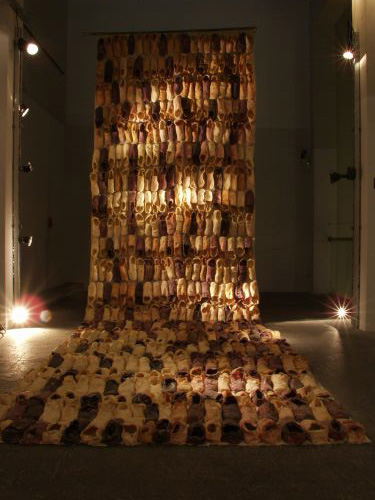


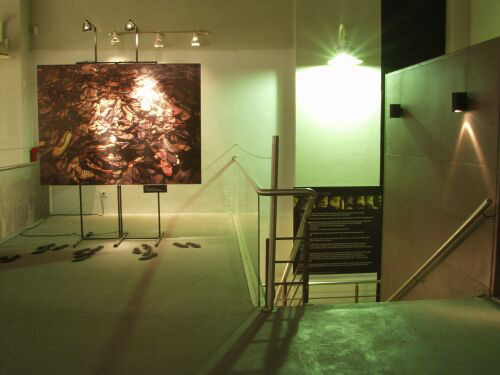
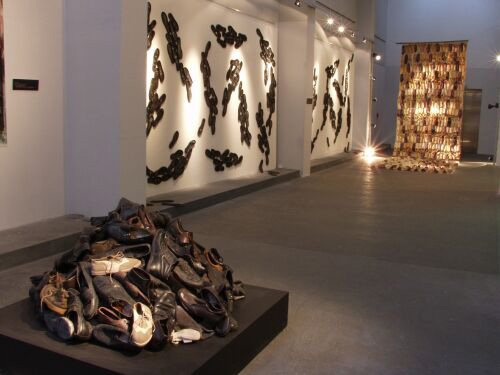
Holocaust Museum Buenos Aires //
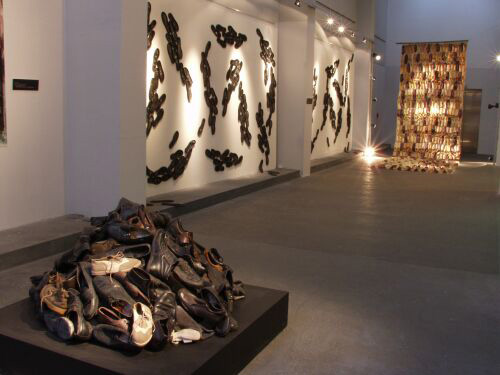
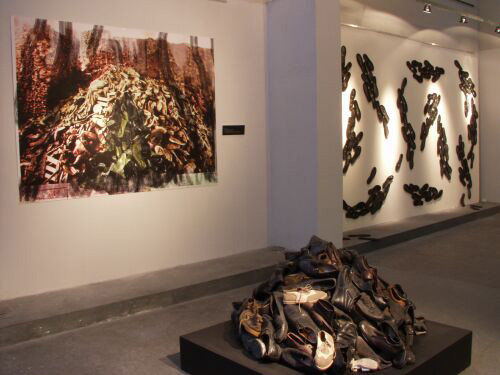
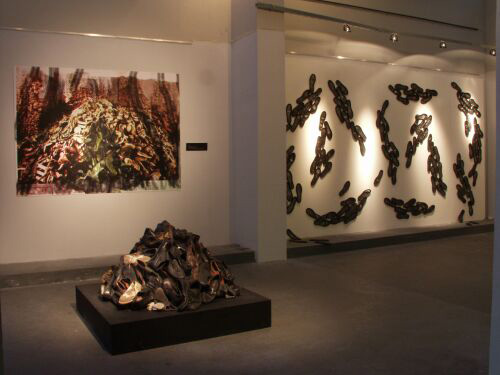
An army of ghosts claims their shoes, and immense wave of deported people seeking their names. The bottomless memory of dispossession, of expropriation, of plunder and tons of shoes heaped together, mixed pairs, lost. (1)
Shoes remit to life and death, to that which was vital to go forward and to what was abandoned as last and mute witness of some extermination.
The articulation of Derrida´s text that approaches this subject from a philosophical point of view, together with the works, creates a necessary link regarding some conceptual aspects that Derrida undertakes such as ¨Desertion-Untying¨. Within this framework, according to this author there are three possibilities:
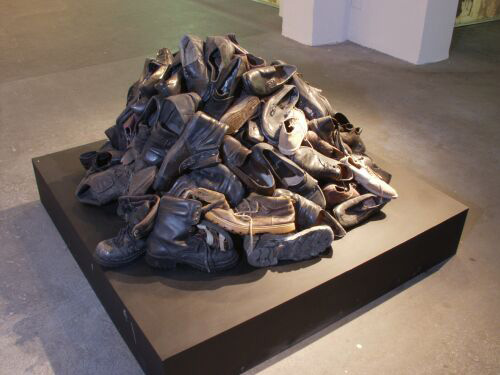
– Shoes unbound from the subject, from feet, abandoned (2), in this case heaped together, piled up.
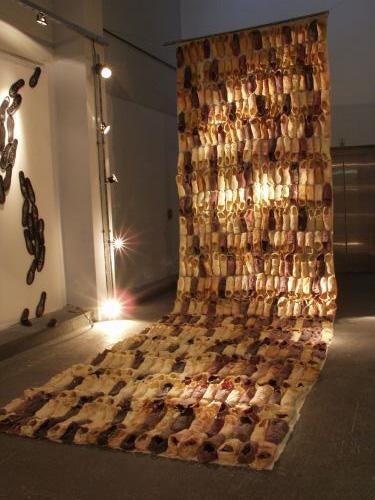
– Unlaced shoes. (3)
– Shoes untied one from the other, in the case that they do not make up a pair, since a pair is linked to ¨normal¨ use. (4)
In the first case, abandoned shoes, forever out of use, untied from ¨walking¨, with no movement, mutilated limbs, substitutes, succedaneum of memory.
In the second place, unlaced, open, they no longer have a close relationship with the bearer; they turn into an anonymous support, light, empty of an absent subject, whose name becomes a ¨ghost”. (5)
If one shoe is untied from the other, that is to say, they do not make up a pair, a disturbing supplement is introduced, a denouement, in some cases turning into the double of the other. The pair separates, but they can still walk on. On the other hand only one shoe makes up a maimed pair, and, if they belong to different pairs, they become a double of the other. This implies a trick to whoever wants to put their feet there (6), a ¨trick similar to the one in which thousands of Jews were ensnared.
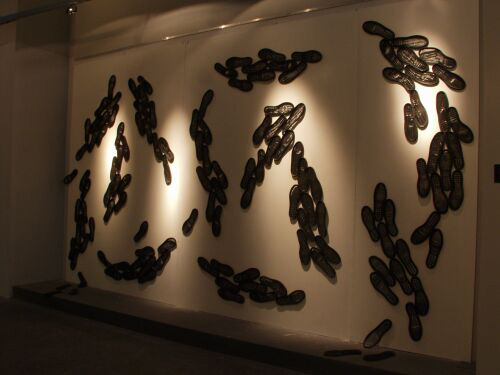
As the shoes leave the ground, the sole becomes visible, as a print on the wall, reinforcing the idea of ¨immobility¨, empty in its materiality, becoming immaterial, losing not only its sense of anchor but its memory as well. The empty prints become a mediating element between memory and its restitution.
Given that another perspective that Derrida approaches is ¨Restitution¨
¿Is it possible to return the shoes to their bearers and link them once again to ¨walking¨, to movement? Though not in a real sense, the pieces of fragmented reminiscences, the impression of which resides in its substance are restorable to the real subject, reconstructing memory.
Hanging over us, the shoes go towards order, a random order towards recovering an identity, from the fragmented remembrances towards collective memory, from the object materiality to soul immateriality.
In short, from an unending past to a promising present, restoring identity and movement to the shoes
(1), (2), (3), (4), (5), (6) Derrida, Jacques. “Restituciones”, La Verdad en Pintura, Buenos Aires, 2010, 1ª edición, Editorial Paidos, pgs 269-395